

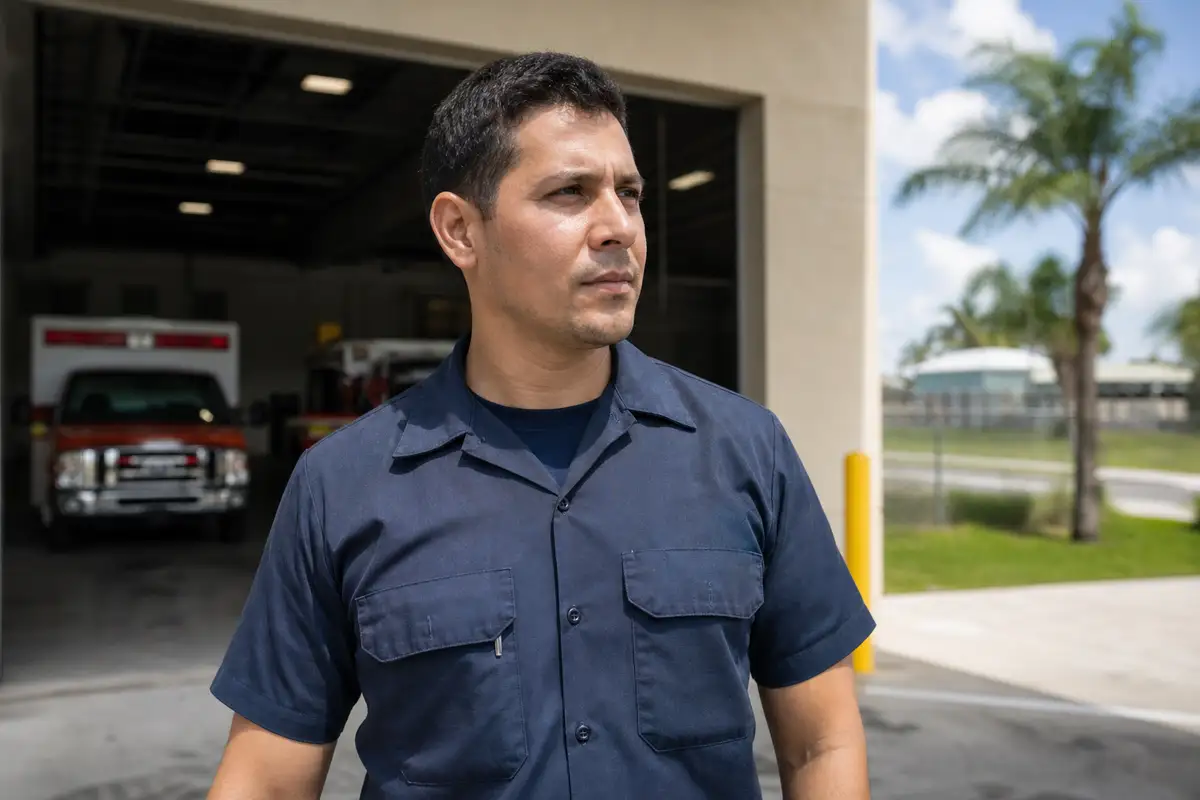
The Income Puzzle That Holds Many EMTs Back
You finished a 24-hour shift in Panama City, drove home through Bay County traffic, and somewhere between the couch and sleep, you thought about owning a home instead of renting one. That thought is not unusual for paramedics and EMTs in this area — but the follow-through is where things get complicated.
The challenge is not ambition. It is paperwork. EMS pay structures are layered: a base hourly rate, overnight differentials, holiday pay, overtime, and sometimes per-diem hours at a second agency. When a loan officer looks at your file without experience reading first-responder income, they can undercount what you actually earn. That gap between what you make and what a lender documents can shrink your purchasing power significantly.
There is a broader staffing conversation happening nationally around EMS wages, and it touches something real for workers in Bay County. Many experienced paramedics here pick up extra shifts precisely because base pay has not kept pace with the cost of living — which means your total income may look strong on a year-end W-2, but irregular month to month. Knowing how to present that picture clearly is half the battle.
Why Bay County Deserves a Closer Look Right Now
Bay County stretches from the Gulf beaches near Panama City Beach inland through communities like Callaway, Lynn Haven, and Youngstown. That geographic range matters when you are shopping for a home, because property types vary considerably — from beach-adjacent condos to single-family homes in quieter inland neighborhoods.
For EMTs and paramedics whose work keeps them tied to the county, the inland areas in particular may open doors that are worth exploring. Portions of Bay County outside the denser urban core around Panama City could fall within USDA Rural Development eligibility zones. That is meaningful because USDA loans may allow qualified buyers to purchase with little to no down payment, which could be a significant advantage if your savings have been slow to build due to the income variability that comes with shift work.
This is not a guarantee of eligibility — USDA qualification depends on the specific property address, your household income, and other factors. But it is worth checking before you assume a large down payment is the only path forward.
How Mortgage Underwriting Sees Your Pay Stub
Most mortgage programs require lenders to document and verify income over a two-year history. For a salaried teacher or office worker, that is straightforward. For a paramedic who works 48-on/96-off, picks up overtime, and occasionally moonlights at a private transport company, the documentation can look messy.
Here is what typically works in your favor: consistency. If your overtime and differential pay appear reliably across two years of W-2s and tax returns, a lender who understands first-responder income can often include that in your qualifying number. If you are newer to EMS, or recently changed employers, the picture may be more limited — but that does not mean homeownership is out of reach, it may just mean the timing or the program choice shifts.
Jim Blackburn, NMLS #1072866, has worked with first responders across Florida and understands how to read an EMS pay stub and build a loan file that reflects your actual financial situation. If you want to understand where you stand before you start touring homes, that conversation is the right place to begin. You can explore loan programs that may fit your situation before we ever talk numbers.
Programs Worth Knowing About
Several mortgage programs may be relevant to EMTs and paramedics buying in Bay County:
FHA Loans — These require a relatively modest down payment and have more flexible credit guidelines than conventional loans. If your credit history has a few bumps from lean years early in your EMS career, FHA could be a reasonable starting point.
Conventional Loans with Low Down Payment Options — Depending on your income and credit profile, some conventional loan programs allow down payments as low as three percent, which can free up cash for move-in costs and reserves.
USDA Rural Development Loans — As noted above, parts of Bay County may qualify. These loans are designed for moderate-income buyers in eligible rural and semi-rural areas, and no down payment may be required for those who meet the guidelines.
HUD’s Good Neighbor Next Door Program — This federal program occasionally opens listings in designated revitalization areas to law enforcement officers, teachers, firefighters, and EMS personnel at a significant discount. Availability is limited and properties rotate, but it is worth checking if any Bay County listings are active when you are ready to move.
You can get a clearer picture of how these stack up by visiting our loan programs overview or by walking through our step-by-step process to understand what happens between application and closing.
Getting Your Finances Positioned
Buying a home in Bay County as an EMT or paramedic is not simply about finding the right program. It is about arriving at the application table in the strongest position your finances allow.
A few things that tend to matter most:
- Credit score — Even a modest improvement in your score can open additional program options. If you have not checked your credit recently, do that first.
- Debt-to-income ratio — Lenders look at how your monthly debt obligations compare to your gross monthly income. If you have a car payment or student loans, those factor in.
- Cash reserves — Some programs want to see that you have savings remaining after your down payment and closing costs. Shift workers who can automate a small monthly transfer to savings often find this easier to build than they expected.
- Documentation readiness — Having two years of W-2s, recent pay stubs, and bank statements organized before you apply speeds everything up and reduces stress.
Our mortgage calculators can help you run some early numbers so you are not walking into a lender conversation cold.
Working with a Team That Knows First Responders
Stairway Mortgage has a dedicated focus on American heroes in the lending process — a category that absolutely includes the men and women running calls across Bay County at 3 a.m. Jim Blackburn, NMLS #1072866, leads the team and brings a straightforward, no-pressure approach to working with first responders who are navigating homeownership for the first time.
There are no vague promises here. What we can tell you is that your income, your service, and your financial story deserve to be read carefully — not crammed into a template built for someone who works a standard 9-to-5. If you are an EMT or paramedic in Bay County who has been putting off this conversation because you were not sure if the numbers would work, the only way to find out is to have it.
Reach out to our team at (954) 993-1625 or take the first step online.